Layout rebuilt from saved text and links; unavailable decorative artwork is omitted.




Archived form — unavailable in this preview.









for only




Latest News & Views



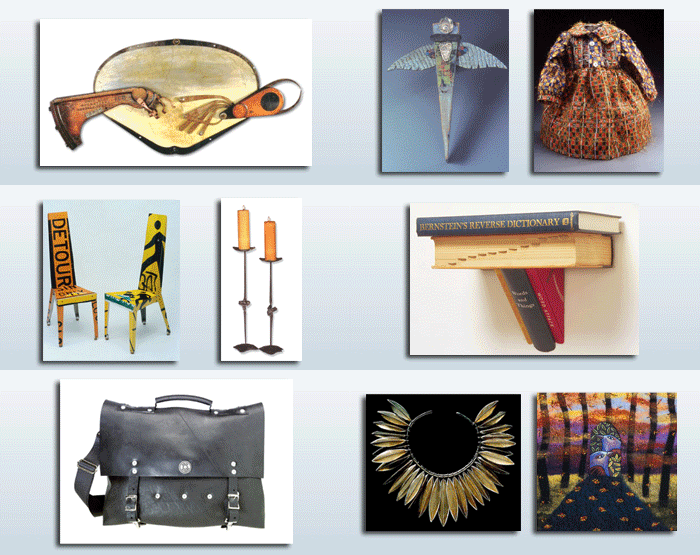
Crafting Art From Found Objects: Seeing Old Things in a New Light
by Ivory Rieger
It is an amorphous medium with no formal representation devoted to its members, and artists who create within its confines come from a range of realms. The only thing they share in common are the terms by which they refer to their materials: found, recycled, discarded, reclaimed, non-precious, alternative, unusual and creatively re-used objects, assemblages or materials.
Artist Bobby Hansson points out in his book, The Fine Art of the Tin Can, how creating art from found objects presents a unique challenge. “Most design approaches start with the function of the object to be made.” To create a piece from reclaimed objects one needs the ability to work backwards. To start with a prefabricated object—that already has unique properties— you must be able to see beyond its present form to transform it into something new.
This quest to see deeply, the desire to transform or transcend reality, is the greater question art should provoke. It is fitting that the deepest history of this loosely defined medium starts with the nihilistic Dada movement.
Though many artisans don’t claim Dada to be a significant influence in their artwork, it seems the success of mixed media couldn’t exist without it. Ever since Marcel Duchamp signed a porcelain urinal and dubbed it “Fountain,” the world has been questioning whether art can truly be made from anything.
One of the first evolutions inspired by this question came when artist Alexander Calder invented moving assemblages from found materials like twisted wire, wheels, string and cloth, and named them mobiles.
By mid-century, the found object made its way into the realms of metal, jewelry and sculpture. Pioneers like Joseph Cornell, J. Fred Woell, Robert Rauschenberg, George Herms, Betye Saar, and Ramona Solberg incorporated objects like dolls, American Red Cross buttons, photographs, mirrors, stuffed roosters, watches, dominoes, perfume bottles, books and other human artifacts into their artworkRead more in this issue of Crafts Business.
